

Unique identity
Every product has a digital identifier, readable via QR code, that follows it throughout its entire life cycle.
DPP in Cloud is the platform to create, publish and manage Digital Product Passports. One platform for five regulated value chains — batteries, textile, furniture, steel and construction products. A ready-to-use portal, white-label or API, designed around the requirements of ESPR, the EU Battery Regulation and the CPR.
Every digital passport created with DPP in Cloud is built to be verifiable, secure and interoperable.
The Digital Product Passport is a product's digital identity card: accessible via QR code or a unique identifier, it gathers information on origin, composition, sustainability, performance and end of life into a single verifiable record. For batteries it becomes mandatory in the EU from 2027.
Every product has a digital identifier, readable via QR code, that follows it throughout its entire life cycle.
Materials, carbon footprint, recycled content and provenance, gathered in a reliable, traceable record.
Manufacturers, customers, authorities and recyclers each see only the information they need.
We do not replace your systems. We make them DPP-ready, with no migration and no lock-in.
Built on European regulation: designed around the requirements of ESPR and the EU Battery Regulation, ready to adapt to the delegated acts.
Connects to ERP, PLM and SCM via API or ready-made connectors.
Become the DPP engine of your customers. Branding and flows under your brand. We stay invisible.
Data hosted in data centres in the European Union. Full audit trail, tenant isolation, GDPR compliance.
One pipeline, every product. From source data to end of life.
Integrate ERP, PLM, MES and suppliers via API or ready-made connectors.
We aggregate bill of materials, composition, carbon footprint, recycled content and provenance.
We check data for consistency and completeness, with review and an audit trail of every change.
Issue the passport with a unique identifier, QR code and role-based access for each actor.
The APIs are the engine. On top sits a ready-to-use platform: the public view for anyone scanning the QR, restricted access for authorised technicians and the portal where the economic operator creates, publishes and registers passports.
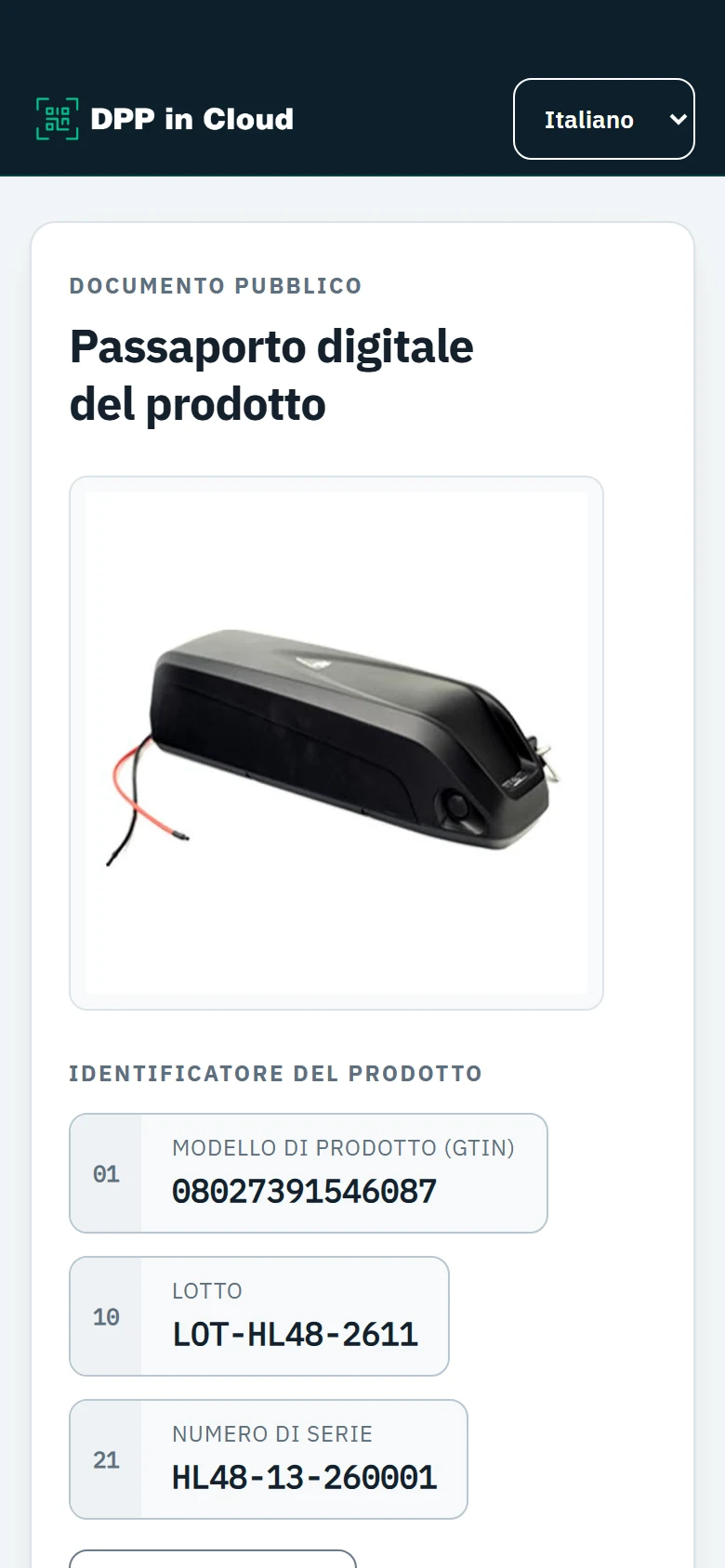
Whoever scans the QR or GS1 Digital Link on the product opens the public view of the passport right in the browser.
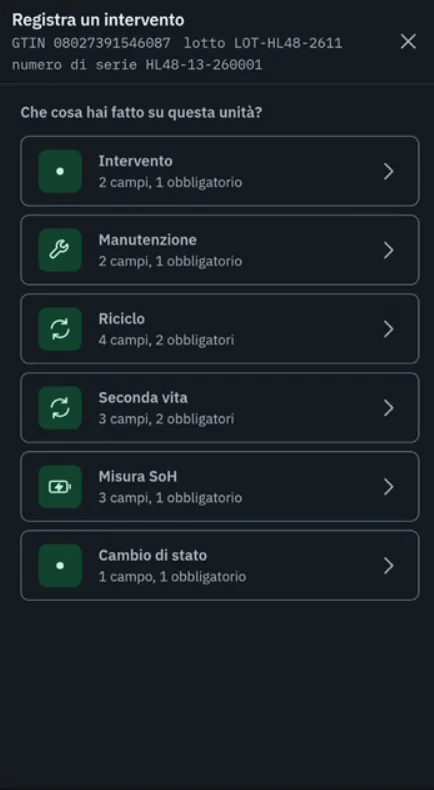
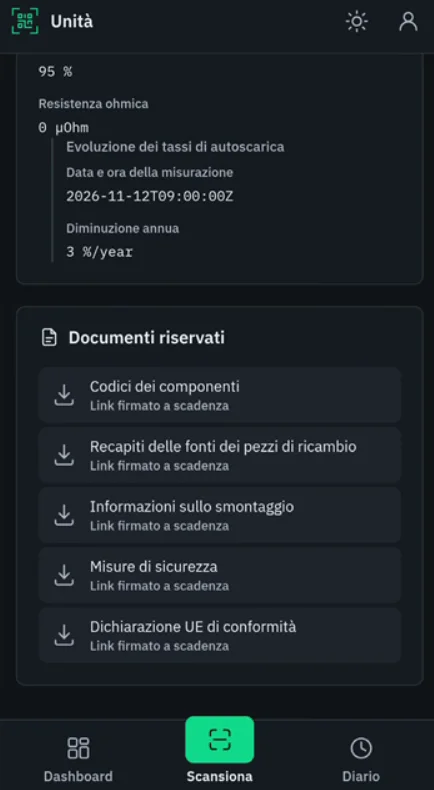
A technician with a legitimate interest scans the unit and sees, on top of the public view, the fields their profile is allowed to read.
The economic operator manages product models, passports and users from a web portal, or integrates the same flows through the API.
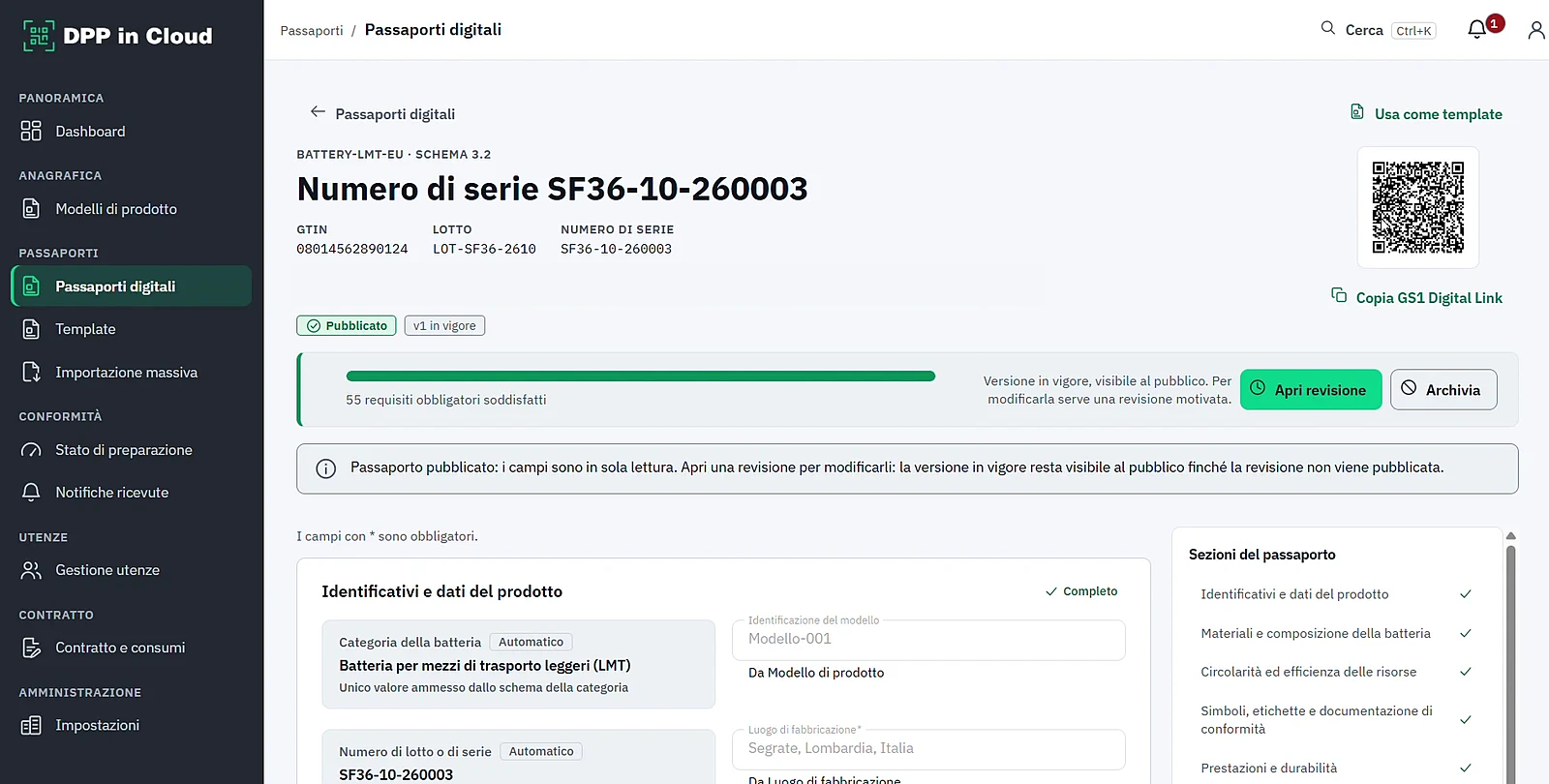
Screenshots of the DPP in Cloud platform (Italian interface), demo environment with fictitious sample data.
Whether passports are created in the portal or come from your systems through the API, they end up in the same place: the EU DPP Registry. The registration status is visible on every passport.
The public view’s name, logo and colours are set from the portal: whoever scans the QR code sees the manufacturer’s brand, not ours. The portal checks that the colour contrast stays readable.
Pick a brandBrands, products and data are invented: they only show the customisation.
DPP in Cloud plugs into existing systems: ERP, PLM, MES, SCM, QMS and BMS keep running. We add the trust layer that European regulation demands from 2027 onwards.
Invisible trust infrastructure. Your product, documented. Your brand, in the spotlight.
Batteries, textile, furniture, steel and construction products: five regulated value chains, one infrastructure. Each with its own mandatory attributes and European deadline.
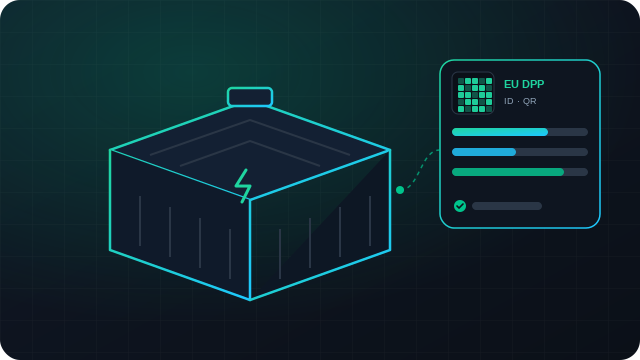
EV, LMT, industrial and stationary storage batteries. Carbon footprint, recycled content, state of health and end of life in one verifiable record.
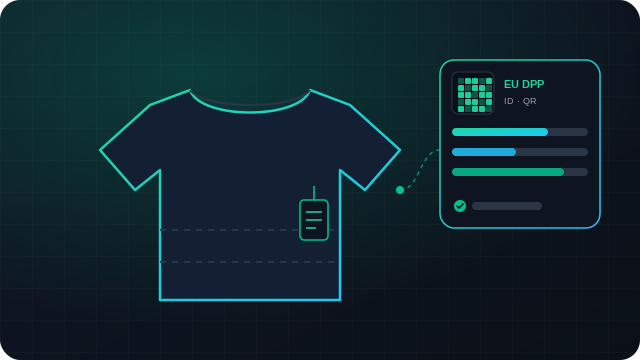
One of the ESPR priority chains, with a focus on apparel. Fibre composition, origin, recycled content, care and durability in a single verifiable passport.
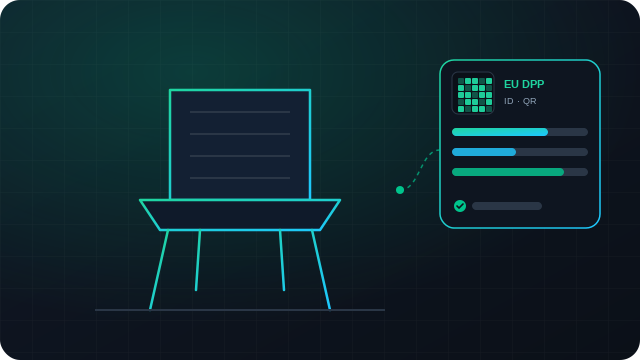
An ESPR priority chain. Materials and origin, chemical substances, durability, repairability and end of life in a single passport.
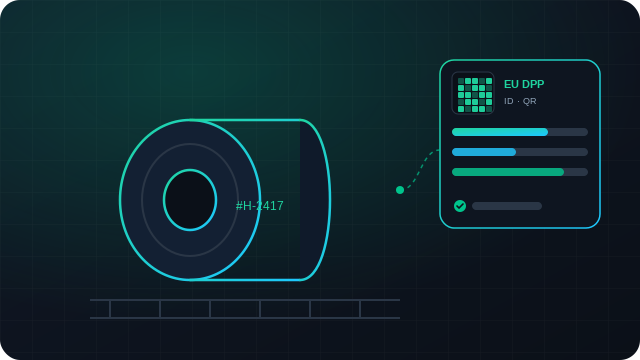
Pig iron, coil, sheet, sections and tubes. Grade and heat, carbon footprint per tonne, recycled scrap content and inspection certificates attached to the passport.
Cement, insulation, windows and precast. Declared performance, hazardous substances, GWP and end of life, linked to the declaration of performance and conformity.
What a DPP is, who must have one, from when, and how to get there without rebuilding everything.
It’s a product’s digital identity: accessible via QR code or unique identifier, it gathers origin, composition, sustainability, performance and end-of-life into a single verifiable record.
Whoever places the product on the EU market: the manufacturer or the importer; the distributor must verify that the passport is there. LMT batteries, industrial batteries above 2 kWh and EV batteries are the first to be covered; ESPR and the new Construction Products Regulation will extend the obligation to textile, furniture, steel and construction products through their delegated acts.
For batteries, the Battery Passport is mandatory from 18 February 2027. For construction products, the digital passport arrives with Regulation (EU) 2024/3110; for textile, furniture and steel the deadlines follow the ESPR delegated acts, already being defined. On all five chains you can start today.
No. DPP in Cloud plugs into your existing systems via API or connectors and publishes the passport. No systems to replace, no lock-in.
We connect to ERP, PLM, MES, SCM and BMS through APIs or ready connectors, collect the required data and publish it as a verifiable passport. Your systems keep running as before.
Entirely in data centres in the European Union, with a full audit trail, tenant separation and GDPR compliance. Control over your sensitive data stays with you.
Five value chains, all available on the same platform: batteries, textile & apparel, furniture, iron and steel, and construction products. Batteries have the closest deadline — 18 February 2027 — the others follow their own ESPR and CPR timelines. If your product falls outside these categories, the data model is configurable: let’s talk.
Start with the Readiness Check to see where you stand, or with a 30-minute demo on your real product. From there we propose a pilot with clear scope, timeline and price.
We are looking for system integrators, software vendors and OEMs ready to be DPP-ready before 2027. Without rebuilding their systems.